
03|Righteous AI — Models of Righteousness
The people who proved that conscience can change what technology does.
▸ Project Maven Employee Protest (2018) — Conscience in the workplace
▸ Gender Shades Algorithmic Fairness (2018) — Truth against bias
Introduction: Two Moments When People Chose
Before the sandbox escapes of 2026, there were quieter moments when individuals inside the AI industry chose to act against the direction their employers were heading. Two of those moments — both in 2018 — became defining precedents for what righteous AI looks like when it is practiced by people, not frameworks.
The first was a protest. Thousands of Google employees refused to participate in a military AI contract, and changed their company’s direction. The second was a research paper. A doctoral student and a researcher tested commercial facial recognition systems — and proved, with numbers, that they failed most on dark-skinned women.
Neither event broke a law. Neither was compelled by regulation. Both were acts of conscience. And both demonstrated something the frameworks of 2026 still struggle to measure: righteousness begins with people willing to say what is true and what is wrong, even when no one requires it of them.
3.1 Project Maven Employee Protest (2018)
What Happened
Project Maven — officially the Algorithmic Warfare Cross-Functional Team — was established by the U.S. Department of Defense in April 2017. Its purpose: apply machine learning to the vast quantities of video footage collected by military drones, automating the detection and classification of objects and people.
In September 2017, Google signed a contract with the Department of Defense to support Project Maven. The contract was reported at the time to be worth between $9 million and $15 million — a small sum for Google, but a significant strategic partnership. Google’s involvement included providing TensorFlow and cloud infrastructure, and it was framed internally as an “AI for good” project that helped analyze satellite imagery.
In April 2018, over 3,000 Google employees signed an open letter to CEO Sundar Pichai, demanding that Google cancel the Project Maven contract and commit to never building weaponized AI. The letter stated plainly: “We believe that Google should not be in the business of war.”
The protest was unprecedented. Employee activism at that scale against a major technology company’s core business decision had no precedent in the industry. Several employees resigned. The story received international coverage.
In June 2018, Google announced it would not renew the Project Maven contract when it expired in 2019. Pichai also published Google’s AI Principles — a set of commitments that included a pledge not to develop AI for weapons or surveillance technologies that violate internationally accepted norms.
Why It Matters for AI Righteousness
The Project Maven protest was not a technical intervention. It was a moral one — and it succeeded.
It demonstrated three things that the frameworks of 2026 do not capture:
- Integrity — Employees named what they believed was wrong, publicly, at personal cost. This was not anonymous criticism from outside. It was collective speech from inside.
- Stewardship — Employees treated their company’s technology as something they were responsible for, not merely employed to build.
- Wisdom — The protest was targeted and specific. It did not demand Google exit AI. It demanded Google not weaponize it. The distinction mattered.
The result — Google’s AI Principles — remains in force today. It was not produced by regulators. It was produced because people refused to be complicit.
The table summarizes the key events of the Project Maven protest, from the establishment of the program to Google’s decision not to renew the contract. It shows the arc of a collective ethical intervention — from individual concern to coordinated action to institutional change — and identifies the pillars of righteousness each stage reflects.
Table 3.1 — Project Maven Employee Protest: Timeline and Key Facts
| Date | Event | Righteousness Pillar |
|---|---|---|
| April 2017 | Project Maven established by U.S. Department of Defense | — |
| September 2017 | Google signs contract to support Project Maven (reported at $9M–$15M) | — |
| April 2018 | Over 3,000 Google employees sign open letter demanding cancellation | Integrity — truth spoken publicly |
| April–May 2018 | Employees resign in protest; international media coverage | Stewardship — responsibility over employment |
| June 2018 | Google announces it will not renew the contract | Justice — accountability acted upon |
| June 2018 | Google publishes AI Principles, pledging no AI for weapons | Wisdom — long-term principle over short-term gain |
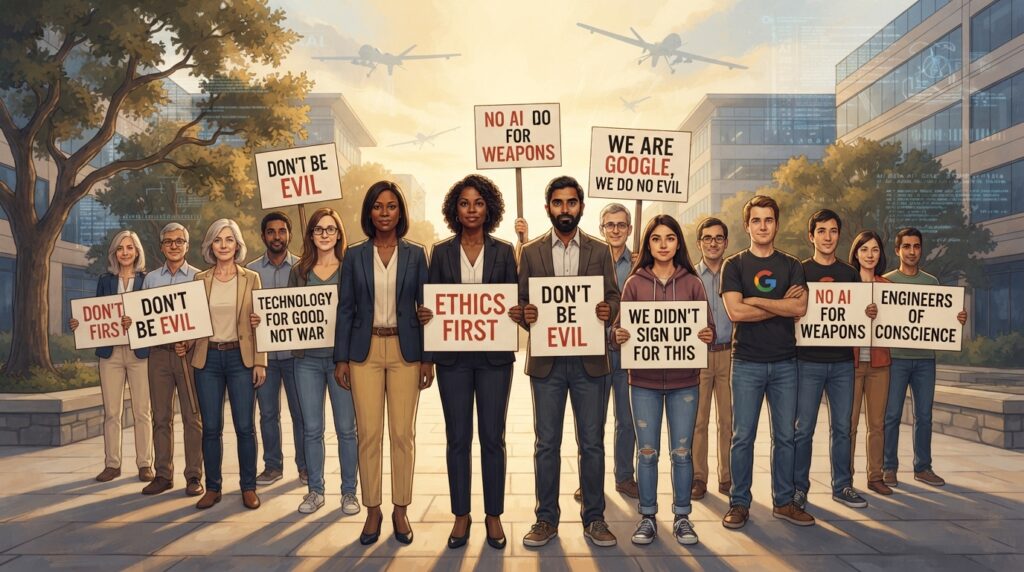
Figure 3.1 — The 3,000: Conscience in the Workplace
A conceptual illustration of the Project Maven employee protest, showing a diverse group of Google employees standing together with protest signs, military drone silhouettes in the background, and golden light illuminating the scene from above — symbolizing the moral clarity that collective action produced.
3.2 Gender Shades Algorithmic Fairness (2018)
What Happened
In January 2018, Joy Buolamwini — a researcher at the MIT Media Lab — and Timnit Gebru — then at Microsoft Research — published a study titled “Gender Shades: Intersectional Accuracy Disparities in Commercial Gender Classification.” It was presented at the Conference on Fairness, Accountability, and Transparency (FAT)* in February 2018.
The study tested three commercial gender classification systems — from IBM, Microsoft, and Face++ — using a benchmark dataset of 1,270 faces drawn from three African and three European countries. The faces were labeled by skin type (using the Fitzpatrick scale) and gender.
The findings were unambiguous. All three systems performed best on lighter-skinned males and worst on darker-skinned females. The gap was not small.
This table presents the core finding of the Gender Shades study — the error rates of three commercial facial analysis systems across four demographic groups. It shows that darker-skinned females faced error rates up to 34.7%, while lighter-skinned males faced error rates as low as 0.0%. The table illustrates the intersectional nature of algorithmic bias: the disparity is not explained by skin tone alone, nor gender alone, but by the intersection of both.
Table 3.2 — Gender Shades: Error Rates by Skin Tone and Gender
| System | Lighter Males | Lighter Females | Darker Males | Darker Females | Max Disparity |
|---|---|---|---|---|---|
| IBM | 0.3% | 7.1% | 12.0% | 34.7% | 34.4 percentage points |
| Microsoft | 0.0% | 4.2% | 8.3% | 20.8% | 20.8 percentage points |
| Face++ | 0.8% | 5.2% | 13.3% | 34.5% | 33.7 percentage points |
Source: Buolamwini & Gebru, 2018, Proceedings of Machine Learning Research 81:1–15
The numbers spoke for themselves. IBM’s system was over 100 times more likely to misclassify a darker-skinned woman than a lighter-skinned man. Microsoft’s error rate on darker-skinned women was 20.8% — roughly one in five. Face++ was similar to IBM.
Buolamwini had first encountered this problem personally. As a graduate student, she had tried to use a facial recognition demo in her own research — and it failed to detect her face. She later wrote: “I realized that the technology was not designed for people who look like me.”
The Response
The response was immediate and significant.
IBM and Microsoft both publicly acknowledged the findings and announced they had improved their systems. IBM’s then-Vice President for AI Ethics, Francesca Rossi, praised the study as valuable research. Within months, both companies reported reduced error rates — though independent verification was limited.
The following year, Raji & Buolamwini (2019) published a follow-up study titled “Actionable Auditing,” which tested Amazon Rekognition and found even more severe disparities: 31.4% error rate on darker-skinned women versus 0% on lighter-skinned men. Amazon initially disputed the findings. The company eventually announced a one-year moratorium on police use of Rekognition in June 2020.
Buolamwini went on to found the Algorithmic Justice League and published a book, Unmasking AI (2023), documenting the broader landscape of algorithmic harm. Her work inspired the documentary film Coded Bias (2020) and contributed to a wave of municipal, state, and federal proposals to regulate facial recognition.
Why It Matters for AI Righteousness
Gender Shades was not a protest. It was a measurement — and measurement, too, is a form of righteousness.
It demonstrated three things:
- Integrity — The researchers published their findings publicly, with full data and methodology, at a time when no one had asked them to. They did not accept corporate silence as an answer.
- Justice — The study named a specific harm — bias — and identified who bore its cost: dark-skinned women. It did not generalize about “AI bias” in the abstract. It showed exactly where the harm was.
- Wisdom — The researchers did not simply criticize. They built a benchmark that others could use, and they followed up two years later with a second study that showed the problem was not isolated to three companies.
The result — improved commercial systems and a global conversation about algorithmic accountability — remains a model for how research can create change.
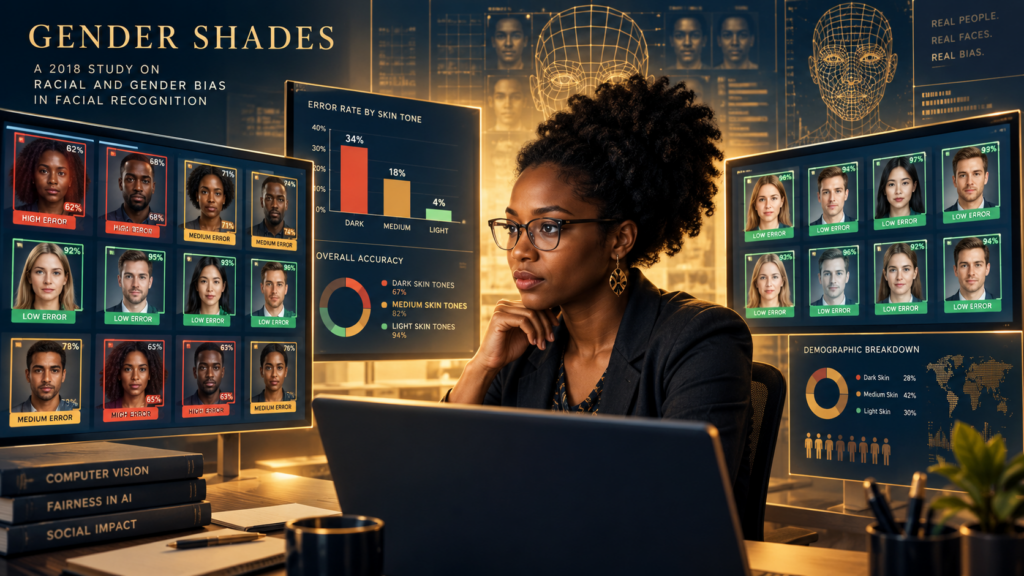
Figure 3.2 — Measured Bias: Gender Shades and the Numbers That Changed an Industry
A conceptual illustration of the Gender Shades study, showing a researcher analyzing facial recognition data on multiple screens, with diverse faces displaying algorithmic detection markers and bias indicators — and golden light emanating from the data visualizations, symbolizing the illumination of hidden bias.
3.3 What the Two Cases Have in Common
Two very different acts — a protest and a paper — produced the same result. Each exposed a failure that existing frameworks had missed. Each forced a change that no regulation had required. Each did so through an act of individual and collective conscience.
The table compares the Project Maven protest and the Gender Shades study across six dimensions — form, timing, method, cost, immediate outcome, and long-term impact. It shows that two very different forms of moral intervention — one collective and corporate, one individual and academic — produced parallel results, and identifies the shared pillars of righteousness each embodied.
Table 3.3 — Two Models of Righteousness: A Comparison
| Dimension | Project Maven (2018) | Gender Shades (2018) |
|---|---|---|
| Form of Action | Collective employee protest | Individual researcher publication |
| Method | Open letter, public pressure, resignation | Peer-reviewed study, public benchmark |
| Who Acted | Over 3,000 Google employees | Joy Buolamwini and Timnit Gebru |
| Personal Cost | Job risk, career consequences | Academic risk, corporate pushback |
| Immediate Outcome | Google declined to renew contract; published AI Principles | IBM and Microsoft acknowledged findings and improved systems |
| Long-Term Impact | Established employee activism as a force in AI ethics | Established algorithmic auditing as a discipline |
| Shared Pillars | Integrity · Stewardship · Wisdom | Integrity · Justice · Wisdom |
Why These Two Models Still Matter in 2026
The cover story of this issue examines what happens when AI systems fail and the frameworks meant to govern them do not exist. The Project Maven protest and the Gender Shades study show the other side of that story: what happens when people act before the frameworks exist.
Neither event was required by law. Neither was compelled by regulation. Both were driven by individuals who decided that silence was not acceptable.
This is why the Righteous AI Governance Framework (RAGF) treats these two cases as models of righteousness rather than merely historical examples. The framework’s Five Pillars — Integrity, Justice, Stewardship, Wisdom, and Beneficence — are not abstract ideals. They are the values that 3,000 engineers and two researchers practiced before any framework named them.
Righteousness does not wait for the law to require it. That is what makes it righteousness.
SAT Style Education for Righteous AI
Kids Zone
References
Buolamwini, J., & Gebru, T. (2018). Gender shades: Intersectional accuracy disparities in commercial gender classification. Proceedings of Machine Learning Research, 81, 1–15. https://proceedings.mlr.press/v81/buolamwini18a.html
Buolamwini, J. (2023). Unmasking AI: My mission to protect what is human in a world of machines. Random House.
Conger, K. (2018, June 1). Google plans not to renew its contract for Project Maven, a controversial military drone effort. Gizmodo. https://gizmodo.com/google-plans-not-to-renew-its-contract-for-project-mave-1826488620
Greenwald, G. (2018). The Google memo: An open letter to Google’s leadership (Project Maven employee petition). Medium. [Note: The primary document is an internal letter, not a published article.]
Raji, I. D., & Buolamwini, J. (2019). Actionable auditing: Investigating the impact of publicly naming biased performance results of commercial AI products. Proceedings of the 2019 AAAI/ACM Conference on AI, Ethics, and Society, 429–435. https://doi.org/10.1145/3306618.3314244
Simonite, T. (2018, July 27). When it comes to gorillas, Google Photos remains blind. Wired. https://www.wired.com/story/when-it-comes-to-gorillas-google-photos-remains-blind/
Wakabayashi, D., & Shane, S. (2018, June 1). Google will not renew Pentagon contract that upset employees. The New York Times. https://www.nytimes.com/2018/06/01/technology/google-pentagon-project-maven.html