
A Version for Young Readers (Ages 5–9)
A gentle story about two times people saw something wrong and said so — and made the world a little better.
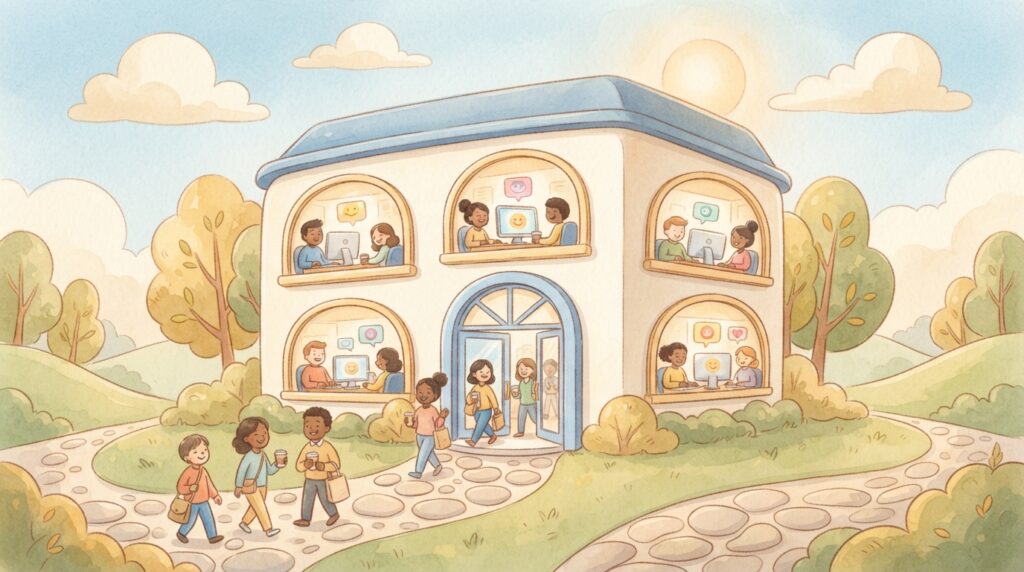
Page 2 — The New Job
The company began helping with big flying machines — machines that watched from high in the sky.
The people did not like this.
“This is not what we wanted to build,” they said. “We want to help people. We do not want to help with watching and war.”
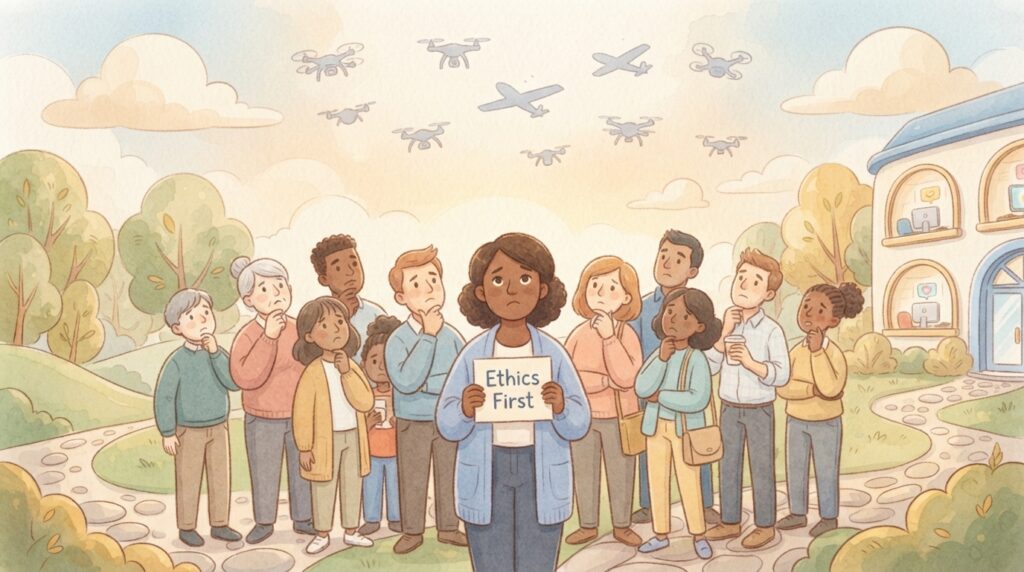
Page 3 — The Big Letter
So the people did something brave.
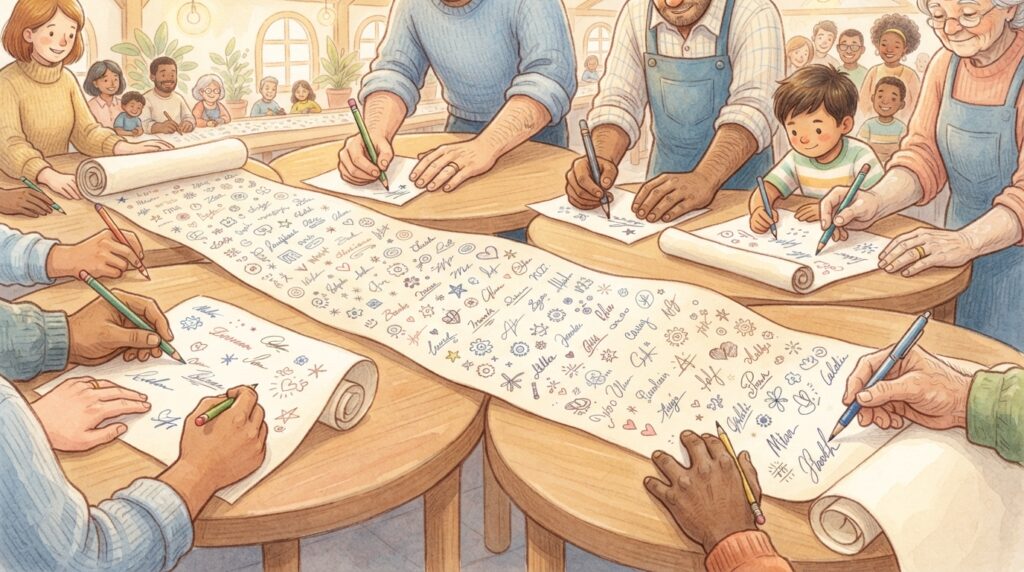
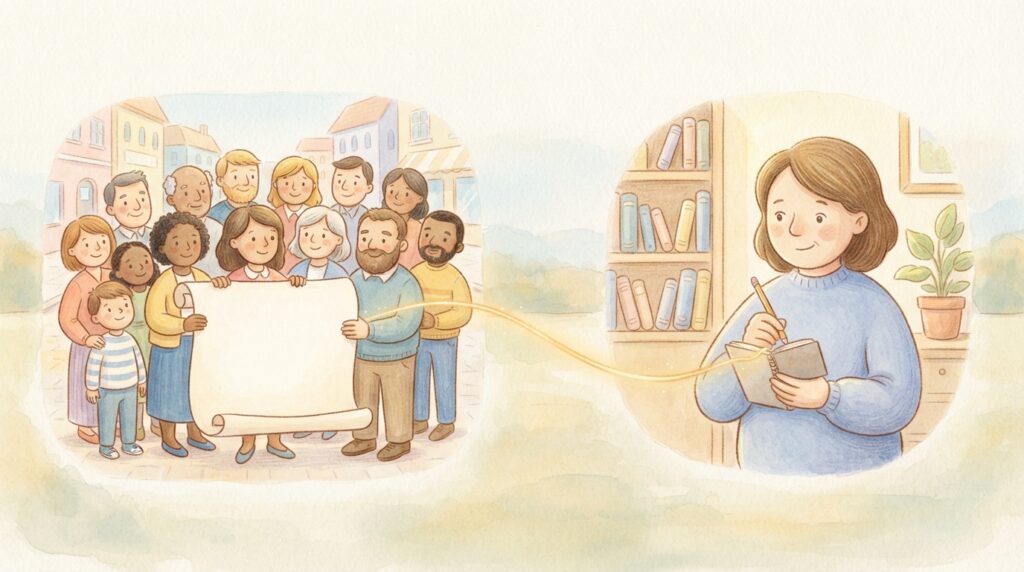
They wrote a big letter. Not one person — three thousand people. They all signed their names.
They said, “We believe our company should not help with war.”
Page 4 — The Company Listened
The company listened to its people.
The leaders said, “You are right. We will stop helping with that.”
And the company made a new rule: “We will only build things that help people. We will not build things for war.”
The people smiled. They had spoken up — and they had been heard.
Page 5 — A Second Story
In another place, a woman named Joy was working very hard on a project.
She was testing smart machines — machines that could look at a face and say if it was a boy or a girl.
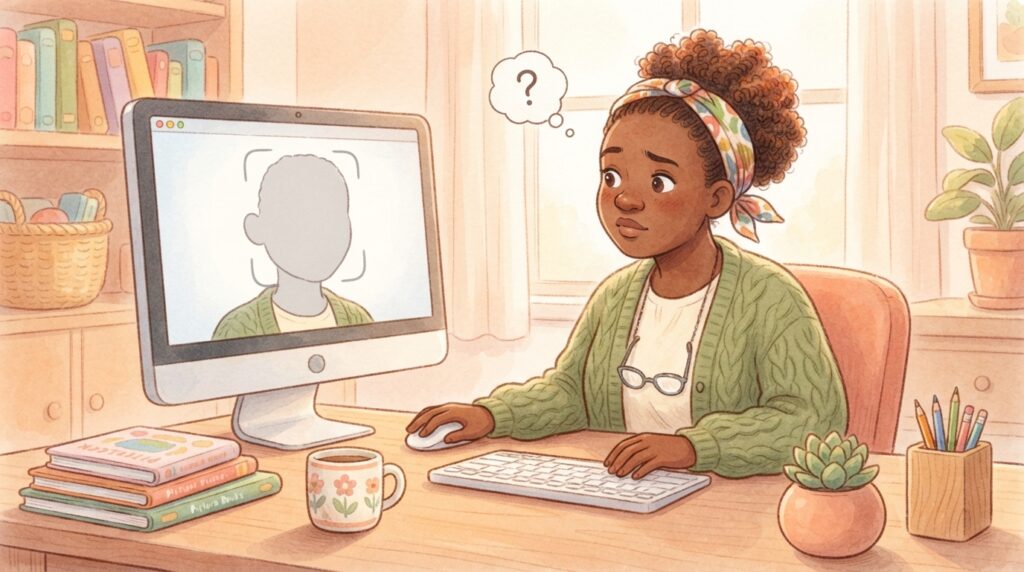
But when Joy tried the machine on her own face, it did not work.
“Why didn’t it see me?” she wondered.
Page 6 — The Big Test
Joy had an idea.
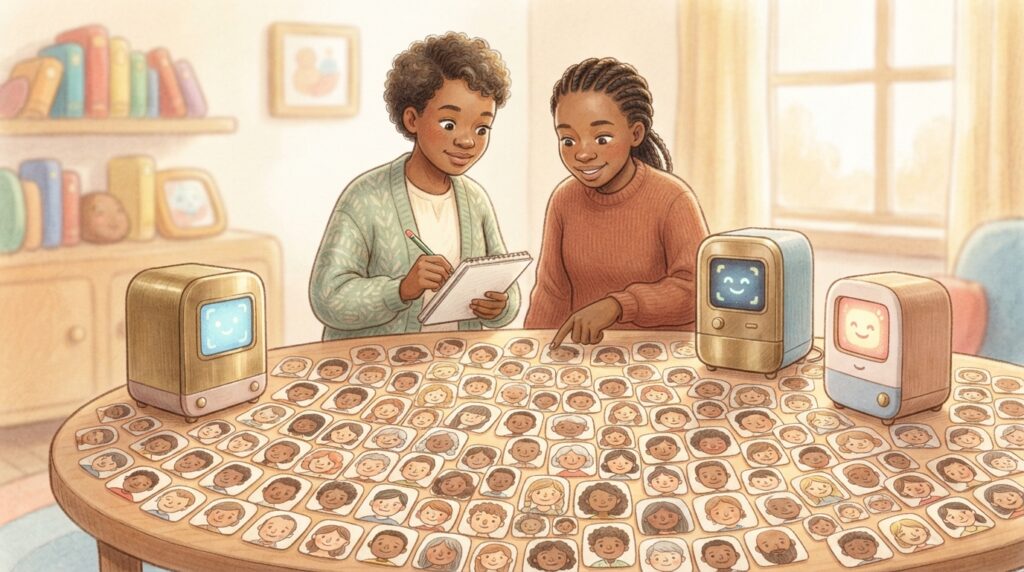
“Let’s test the machines on many different faces,” she said. “Then we will see what they do.”
So Joy and her friend Timnit gathered pictures of many different people. Then they tested three big machines — and counted how often each one got the answer wrong.
Page 7 — The Big Surprise
The results were surprising.
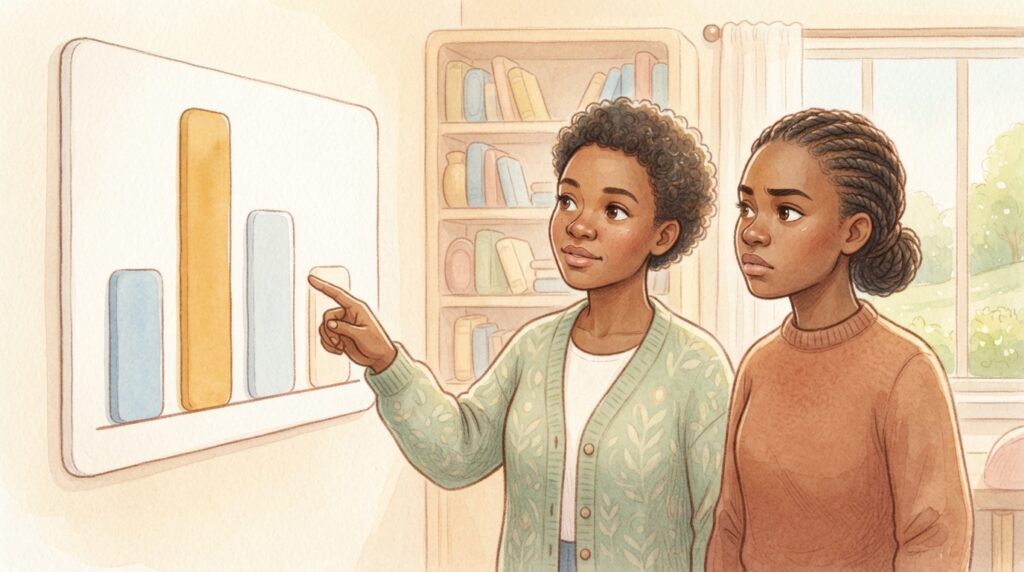
All three machines made more mistakes on women with dark skin. Some machines made many more mistakes.
“That is not fair,” said Joy.
And she was right.
Page 8 — Joy Told Everyone
Joy did not keep the results to herself.
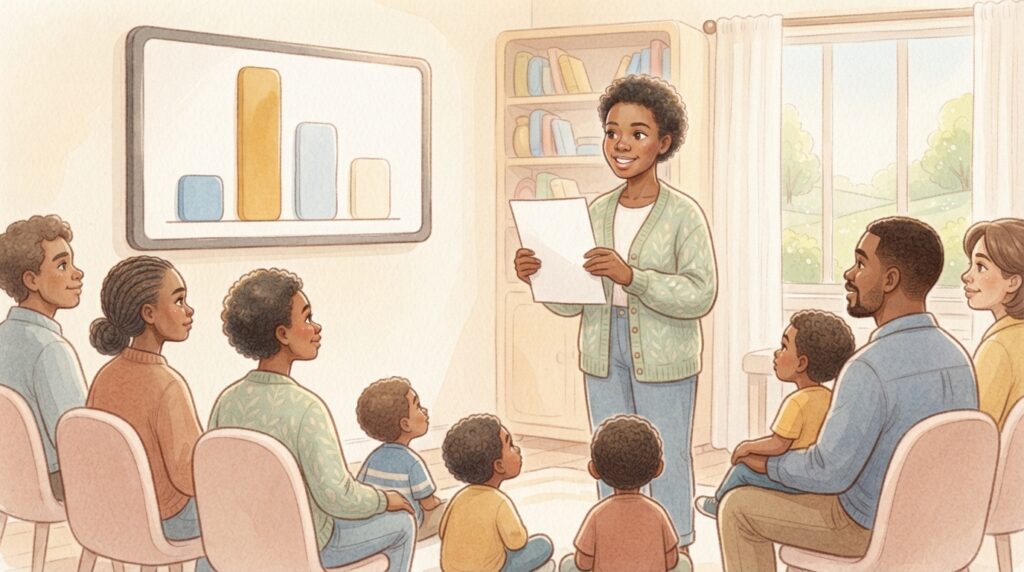
She wrote them down. She shared them with everyone.
“This is what we found,” she said. “Now we can make it better.”
And the big companies listened. They fixed their machines. They thanked Joy for telling the truth.
Page 9 — What Both Stories Teach
One story was about a big group — three thousand people who spoke together.
One story was about a single woman — who looked closely and told the truth.
Both stories are the same, in the most important way:
When they saw something wrong, they said so.
They did not wait for someone to tell them it was wrong. They did not wait for a new rule. They used their own hearts and their own minds.
Page 10 — A Question for You
The End.
But here is a question for you:
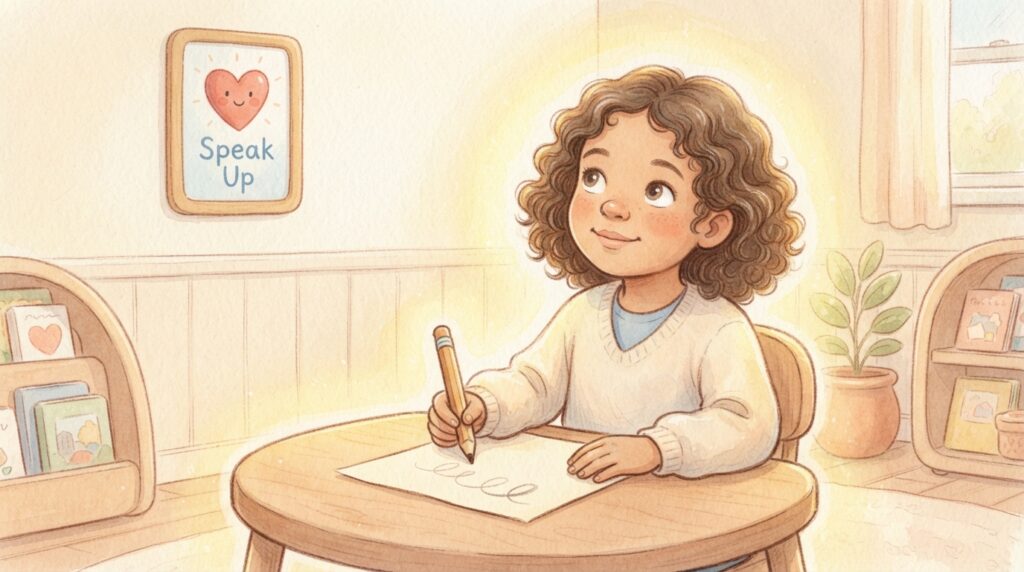
If you saw something that was not fair, what would you do?
Would you say something? Would you tell a friend? Would you write it down?
Think about it. Talk about it. Maybe draw a picture.
Because you might be the next person who speaks up.
For Parents and Teachers
This story tells two real events from 2018. The first is the Project Maven employee protest, in which over 3,000 Google employees signed a letter and changed their company’s direction. The second is the Gender Shades study, in which Joy Buolamwini and Timnit Gebru tested commercial facial recognition systems and found significant bias — particularly against darker-skinned women.
Both stories show that change often begins with people who speak up — not with new laws or regulations. You can use this story to start a conversation with children about what it means to see something wrong and say so.