
05|Righteous AI Governance Frameworks (RAGF) — Standards and Methodology
The Righteous AI Governance Framework (RAGF) begins with a distinction that no other framework makes explicit: righteousness is not ethics.
Ethics, as commonly practiced in AI governance, asks a defensive question: “Are we violating any law, norm, or principle?” It sets a boundary — a line that must not be crossed. Compliance frameworks, risk assessments, and codes of conduct all operate within this logic. Their purpose is to prevent harm, avoid liability, and satisfy regulators. The standard they uphold is the minimum.
Righteousness asks a different question entirely: “Are we actively pursuing what is good?” It is not satisfied by the absence of violation. It demands the presence of integrity, justice, stewardship, wisdom, and beneficence — not merely the avoidance of their opposites. Where ethics draws a floor, righteousness sets a direction.
This is why RAGF is not another ethics framework. It is a righteousness framework — and the difference is structural, not semantic. Ethics tells you what not to do. Righteousness tells you what to become.
That conviction shapes everything in RAGF. Righteousness is defined through the Five Pillars — Integrity, Justice, Stewardship, Wisdom, and Beneficence — the values that righteous AI must actively pursue, not merely avoid violating. Righteousness is built into structure through the Seven-Layer Governance Architecture — Foundation, Policy, Map, Measure, Manage, Assess, and Sustain — so that moral intention becomes institutional practice. Righteousness is made measurable through the RI Measurement System — the Righteousness Index (RI), Righteousness Growth Score (RGS), Righteousness Decision Metric (RDM), and Righteousness Performance Score (RPS) — transforming an abstract ideal into a quantifiable, auditable, and continuously improvable capability.
Existing frameworks — including OpenAI’s Frontier Governance Framework, Anthropic’s Responsible Scaling Policy, and Google DeepMind’s Frontier Safety Framework — remain risk-management and ethics tools. They define the floors below which behavior must not fall. RAGF defines the heights to which AI governance should rise.
This is why RAGF answers a question no other framework fully addresses: “How do we measure and grow righteousness over time?” It treats governance not as compliance, not as ethics, but as the continuous pursuit of what is right.
The Framework Landscape: What Exists, and What It Misses
Between 2023 and 2026, every major AI developer published its own governance framework. Anthropic released its Responsible Scaling Policy (RSP), now in its third version, centered on proportional, iterative risk governance with capability thresholds and safety red lines. OpenAI published its Frontier Governance Framework (FGF) in May 2026, mapping four categories of systemic risk — cyber offense, CBRN, harmful manipulation, and loss of control — to emerging legal requirements under California’s Transparency in Frontier AI Act and the EU AI Act. Google DeepMind released its third Frontier Safety Framework (FSF), introducing Critical Capability Levels (CCLs) for harmful manipulation and misalignment risks. Microsoft, Meta, and xAI each followed with frameworks of their own. At the government level, NIST’s AI Risk Management Framework and the EU’s AI Act provided regulatory scaffolding.
These frameworks represent real progress. They share important commonalities: all prioritize misuse risks, set capability thresholds, and emphasize lifecycle management. But they also share a fundamental limitation — they are all risk-management frameworks. They answer the question: “How do we identify and reduce harm?”
None of them answers the question RAGF was built to address: “How do we measure and grow righteousness over time?”
The table 5.1 compares five major AI governance frameworks — OpenAI’s Frontier Governance Framework (FGF), Anthropic’s Responsible Scaling Policy (RSP), Google DeepMind’s Frontier Safety Framework (FSF), NIST’s AI Risk Management Framework (AI RMF), and the Righteous AI Governance Framework (RAGF) — across six dimensions: publication date, core orientation, primary question, scope, measurement approach, and accountability mechanism. The comparison reveals that existing frameworks are predominantly risk-based and company-specific, while RAGF introduces a value-driven, measurable, and cross-organizational alternative.
Table 5.1 — Comparison of Leading AI Governance Frameworks
| Dimension | OpenAI FGF (2026) | Anthropic RSP v3 (2026) | Google DeepMind FSF v3.1 (2026) | RAGF (2026) |
|---|---|---|---|---|
| Core Orientation | Compliance alignment | Risk-proportional scaling | Capability threshold monitoring | Righteousness cultivation |
| Primary Question | “Do our practices meet legal requirements?” | “At what capability threshold must we upgrade safeguards?” | “What capability levels warrant heightened governance?” | “How do we measure and grow righteousness?” |
| Scope | OpenAI models only | Anthropic models only | DeepMind models only | Full AI lifecycle, all actors |
| Measurement Approach | Internal evaluation vs. regulatory benchmarks | Capability thresholds triggering ASL upgrades | Critical Capability Levels (CCLs) | RI · RGS · RDM · RPS |
| Accountability Mechanism | Self-reported | Internal officer + CEO review | Internal safety case reviews | External audit via metrics |
| Foundational Values | Risk categories (cyber, CBRN, manipulation, loss of control) | Catastrophic risk thresholds | Misuse + misalignment risks | Five Pillars: Integrity · Justice · Stewardship · Wisdom · Beneficence |
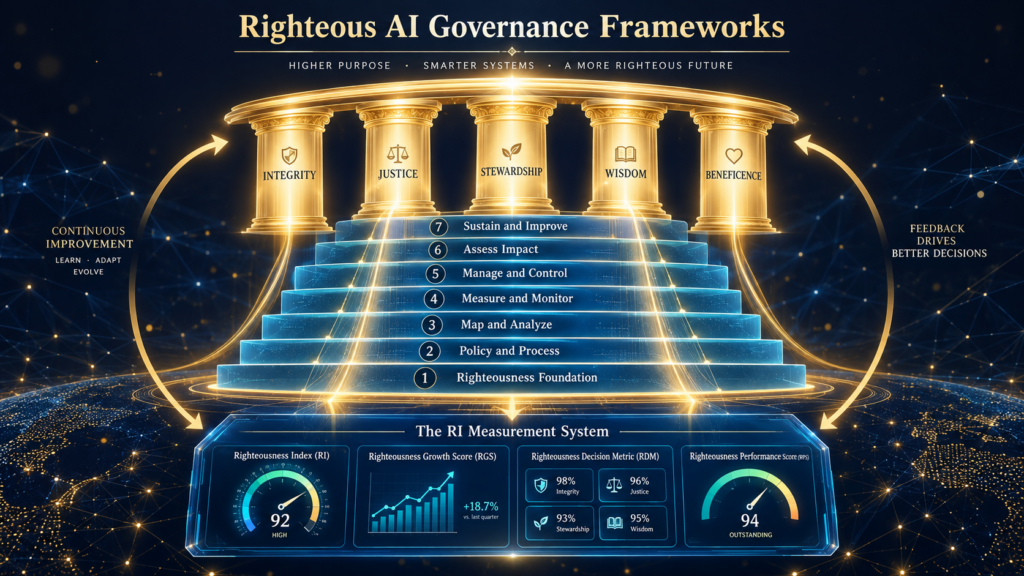
Figure 5.1 — The RAGF Architecture: From Pillars to Measurement
Figure 5.1 Description: A layered architectural diagram illustrating the three interconnected components of the Righteous AI Governance Framework. The diagram shows the Five Pillars of AI Righteousness at the top, the Seven-Layer Governance Architecture in the middle, and the RI Measurement System at the bottom, with arrows showing how values flow downward into processes and how metrics flow upward to inform continuous improvement.
The composition is a vertical layered structure with three distinct tiers:
AGF Different: Four Critical Distinctions
1. Risk avoidance vs. active righteousness. Every existing framework defines governance in negative terms — preventing catastrophic outcomes, mitigating misuse, reducing harm. OpenAI’s FGF sets thresholds at “over 50 deaths or over $1 billion in damages”. These are floors — the minimum below which behavior must not fall. RAGF introduces five positive pillars — Integrity, Justice, Stewardship, Wisdom, and Beneficence — that define what AI governance should actively pursue, not merely avoid. As the RAGF framework states: “Law sets the minimum standard. Righteousness pursues the highest.”
2. Self-assessment vs. measurable accountability. Current frameworks rely heavily on internal evaluation. Anthropic’s RSP requires review by its own Responsible Scaling Officer and CEO. OpenAI’s FGF is described as a public governance document, but its evaluations are conducted internally. A comparative analysis of five major frameworks found that “third-party review is often procedural rather than substantive, and independent audit remains insufficient”. RAGF’s RI Measurement System — the Righteousness Index (RI), Righteousness Growth Score (RGS), and related metrics — provides quantifiable, auditable indicators that can be verified by external parties, not just self-reported.
3. Company-specific vs. universally applicable. Anthropic’s RSP applies to Anthropic models. OpenAI’s FGF applies to OpenAI models. Google’s FSF applies to Google models. Each framework is calibrated to its own company’s risk tolerance, business model, and competitive position. RAGF is designed as a cross-organizational standard — applicable to developers, providers, organizations, users, AI agents, and robots across the full AI lifecycle.
4. Reactive thresholds vs. proactive architecture. Current frameworks define what happens after a capability threshold is crossed. They are, by design, reactive. RAGF’s Seven-Layer Governance Architecture (Foundation → Policy → Map → Measure → Manage → Assess → Sustain) builds governance into the system from the ground up — ensuring that righteousness is not an afterthought triggered by a risk assessment, but a structural property of the system from its foundation.
The Core Distinction
The difference can be stated simply: existing frameworks treat governance as compliance — a set of rules to satisfy before deployment. RAGF treats governance as capability — a set of practices to develop, measure, and improve over the full life of an AI system.
OpenAI’s FGF is primarily a document explaining “how our safety and security practices align with emerging legal requirements”. It is, by its own admission, a translation of existing practices into regulatory language. RAGF does not translate existing practice. It proposes a new architecture — one in which righteousness is not a constraint on AI development, but its organizing principle.
This is why RAGF answers a question no other framework fully addresses: “How do we measure and grow righteousness over time?” It transforms righteousness from an abstract ideal into a measurable, auditable, and continuously improvable governance capability — and it does so at every layer, for every actor, across every stage of the AI lifecycle.
Explore RAGF Framework →
www.wiserighteous.org/righteous-ai-governance-framework-ragf/
References
Anthropic. (2026). Responsible scaling policy updates (Version 3.3). Anthropic. https://www.anthropic.com/responsible-scaling-policy
DeepMind. (2025, September 22). Strengthening our Frontier Safety Framework. Google DeepMind. https://deepmind.google/blog/strengthening-our-frontier-safety-framework/
European Commission. (2024). Regulation (EU) 2024/1689 — Artificial Intelligence Act. Official Journal of the European Union. https://digital-strategy.ec.europa.eu/
National Institute of Standards and Technology. (2023). Artificial Intelligence Risk Management Framework (AI RMF 1.0). U.S. Department of Commerce. https://airc.nist.gov/airmf-resources/
OpenAI. (2026, May 28). OpenAI Frontier Governance Framework. OpenAI. https://openai.com/zh-Hant/index/openai-frontier-governance-framework/
WiseRighteous Network. (2026). Righteous AI Governance Framework (RAGF) (Version 0.5). https://www.wiserighteous.org/righteous-ai-governance-framework-ragf/