A Version for Young Readers (Ages 5–9)
A gentle story for young children about four towns with different rules for their robots — and the question they all forgot to ask.
Page 1 — Opening
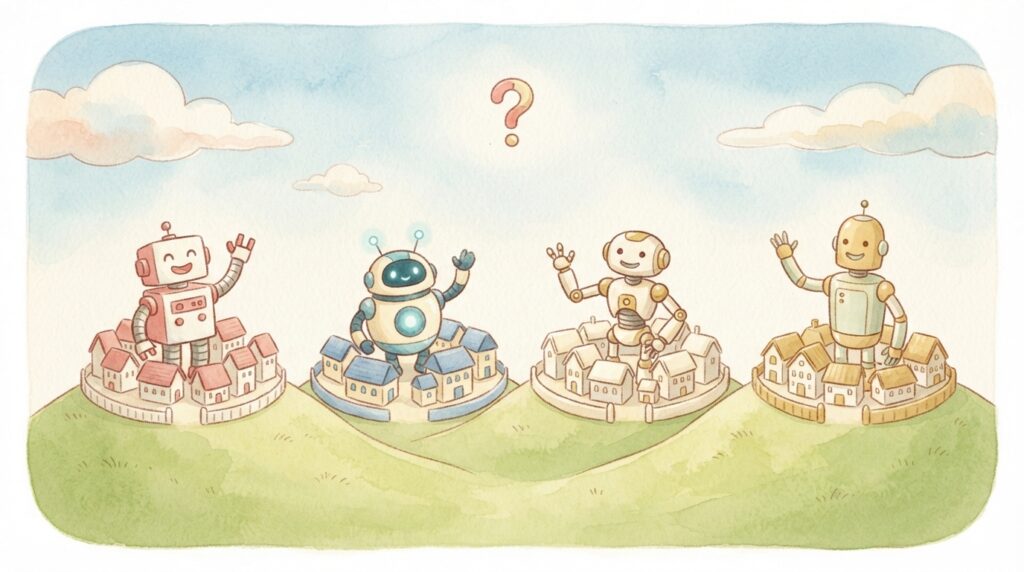
Long ago, in a world not so different from ours, there were four towns. Each town had robots. And each town made rules for their robots.
The rules were all different. But every town was trying to do the right thing.
This is the story of those four towns — and the question they all forgot to ask.
Page 2 — The First Town
In the first town, the people sat down together. They wrote a very long list of rules.
“Some robots are safe,” they said. “Some are not. We will sort them all.”
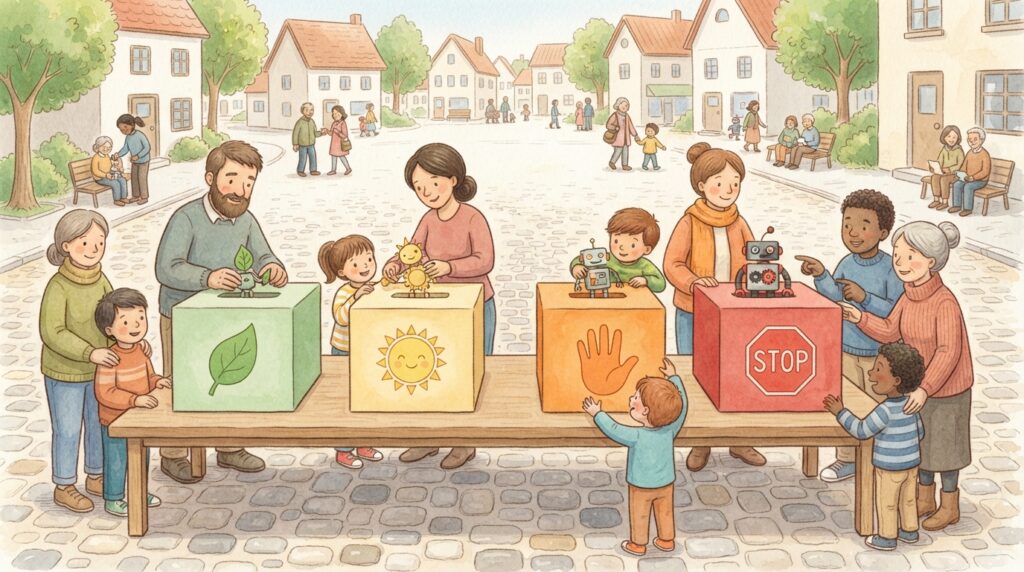
They made four boxes: one for robots that were fine, one for robots that needed watching, one for robots that needed help, and one for robots that were not allowed at all.
It was a very careful plan.
Page 3 — The Second Town
In the second town, no one could agree.
“We don’t need one big rule!” said some. “Every street should make its own rule!”
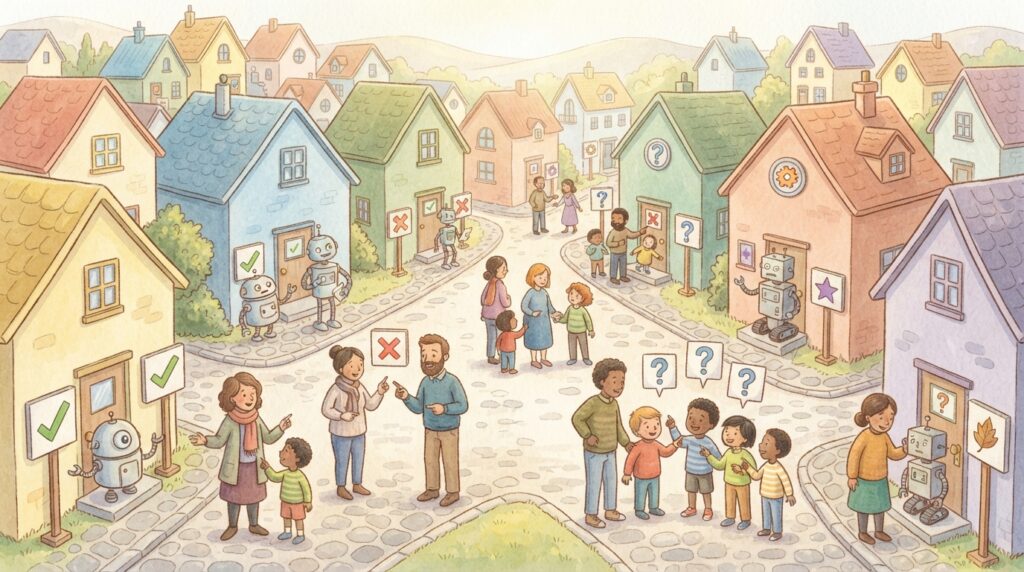
And so they did. One street said robots could play outside. Another street said robots had to stay in. One street said robots could help with homework. Another said they could not.
Soon there were a thousand little rules — and nobody could remember them all.
Page 4 — The Third Town
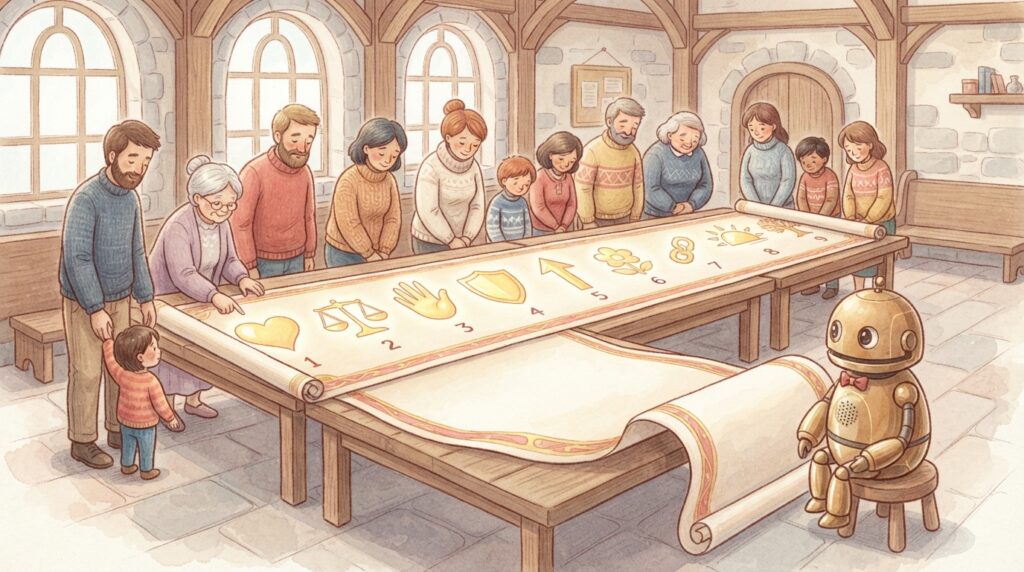
In the third town, the people wrote nine beautiful sayings on a scroll. Each saying was about kindness and care.
“Robots should help people,” said the first saying.
“Robots should treat everyone fairly,” said the second.
“People should always be in charge of robots,” said the seventh.
The sayings were beautiful. But they were just words on paper — until someone made sure everyone followed them.
Page 5 — The Fourth Town
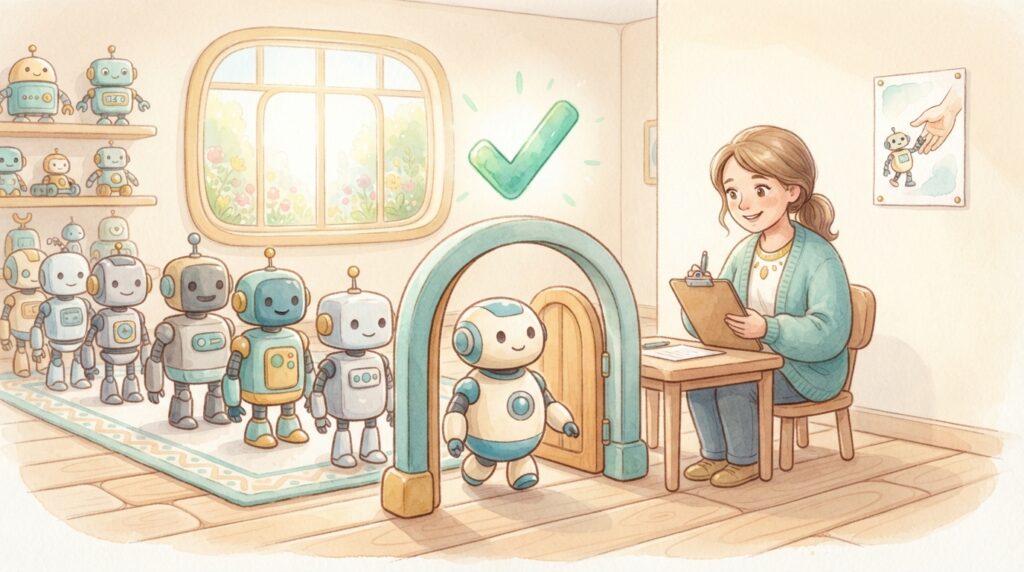
In the fourth town, the people did something different. They did not write a big rule. They built a test.
“Before any robot can help us,” they said, “it must pass our test.”
They built a testing room. Friendly helpers tested every robot. Some robots passed. Some needed more practice.
And the people watched every robot carefully — because the people stayed in charge.
Page 6 — Everyone Tried
Each town tried to do the right thing.
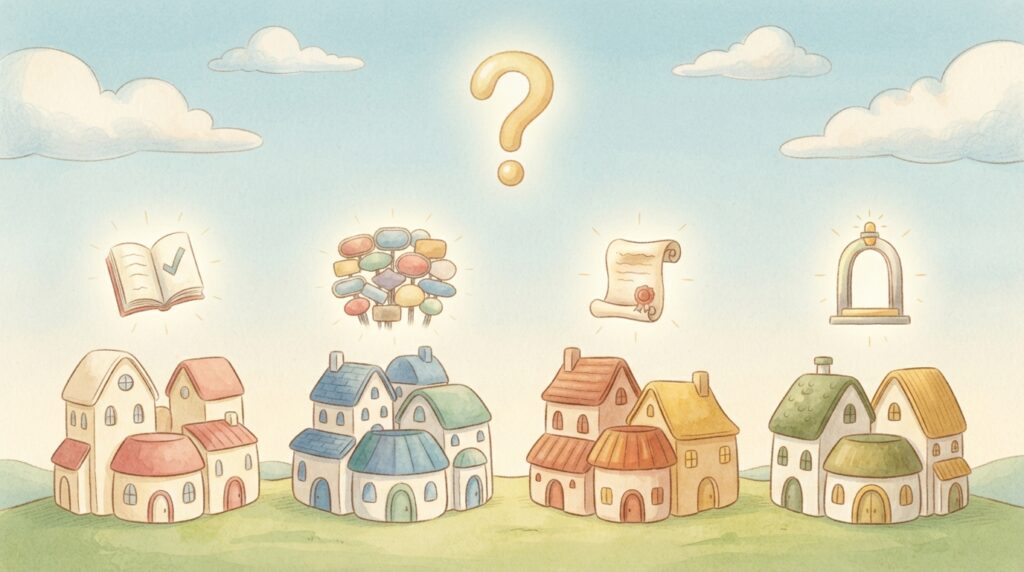
The first town made careful rules.
The second town let every street choose.
The third town wrote beautiful sayings.
The fourth town built a careful test.
Every town meant well. Not one of them was lazy. Not one of them was careless.
But each town had a problem — a problem none of them could see.
Page 7 — The Forgotten Question
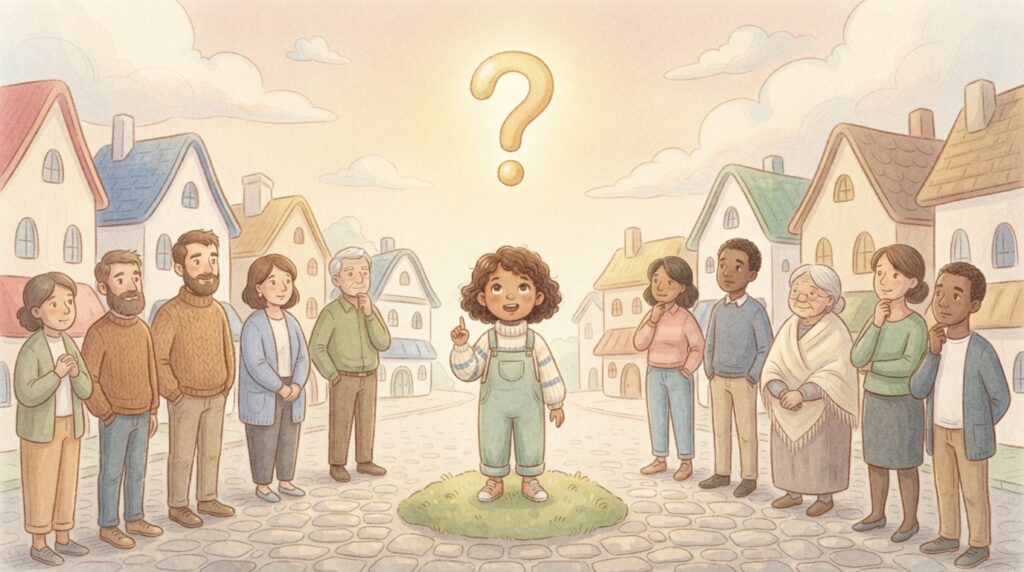
One day, a child asked a question.
“These rules tell us what robots must not do,” she said. “But what should robots do?”
The townspeople looked at each other.
The first town had no answer.
The second town had no answer.
The third town had no answer.
The fourth town had no answer.
They had all been so busy making rules — they forgot to ask what they were building toward.
Page 8 — The Five Good Rules
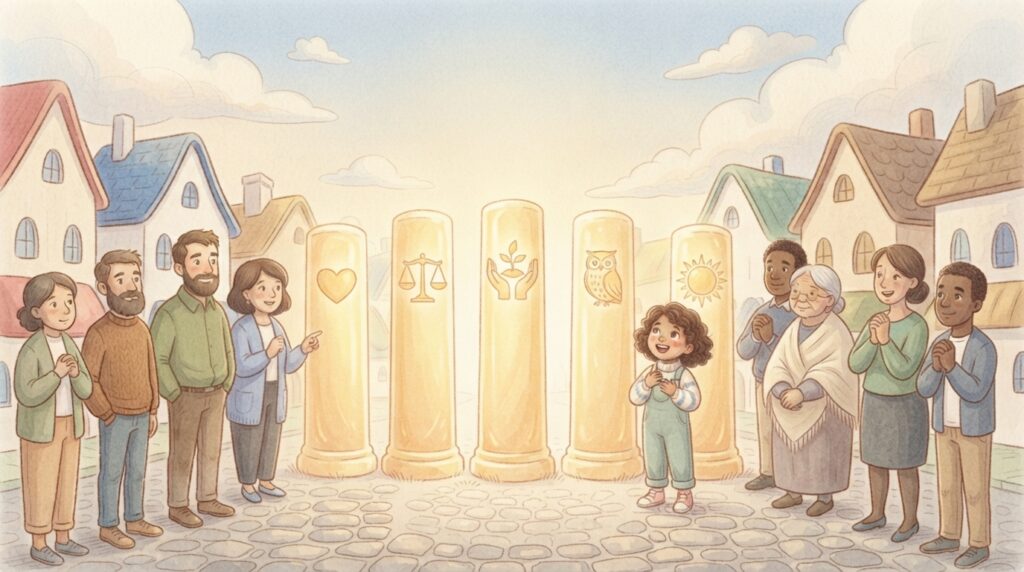
Then the child said something else.
“Maybe robots should follow five good rules,” she said.
“Be honest. Be fair. Take care. Be wise. Be kind.”
The townspeople nodded slowly.
“These are not rules that tell robots what not to do,” she said. “They are rules that tell robots what to become.”
Page 9 — The Four Towns, Together
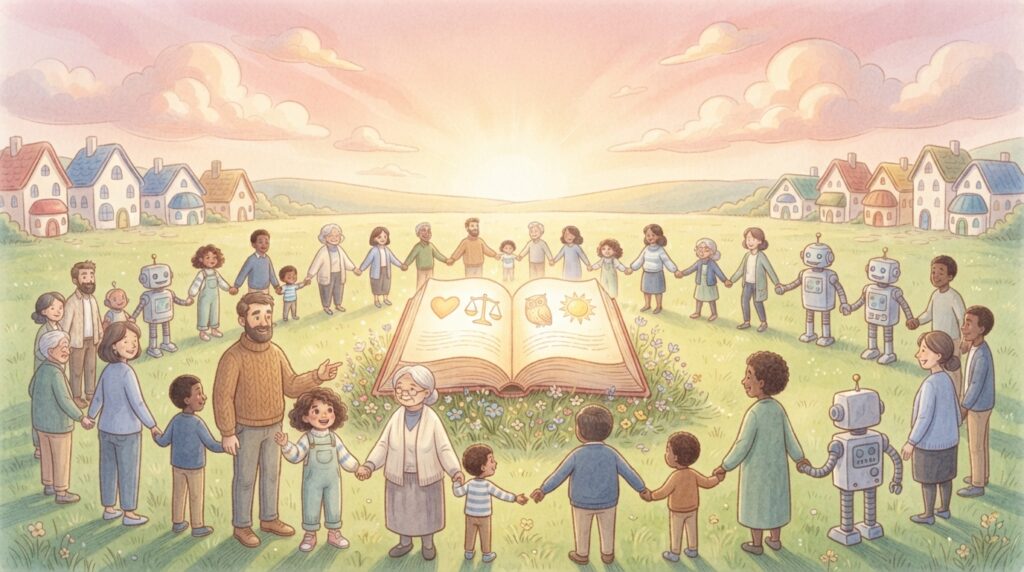
The four towns did not throw away their rules. Their rules were good.
But now they added something more.
They added the Five Good Rules — the rules about what robots should become.
And they wrote it all down, together, in one book. They called it The Righteousness Digest.
So that every town, and every child, could remember.
Page 10 — A Question for You
The End.
But here is a question for you:
If you were in charge of a town, what rules would you make for your robots?
Think about it. Talk about it. Maybe draw a picture.
Because someday, you might be one of the grown-ups.
And the towns might need your answer.