
Righteous Event: Six Prosecutors, One Bold Stand in Minnesota, 2026

Figure 1. The Front Line: Six Prosecutors Who Redefined Legal Righteousness
Introduction
On January 7, 2026, Renee Nicole Good, a 37-year-old U.S. citizen and mother of three, was fatally shot by ICE agent Jonathan Ross in Minneapolis (Londoño, 2026). The shooting occurred amid a massive immigration enforcement surge ordered by the Trump administration, which had deployed hundreds of federal agents to Minnesota (Sirota, 2026).
The Hennepin County Medical Examiner ruled Good’s death a homicide (FOX 9, 2026). Yet the Department of Justice, led by Attorney General Pam Bondi, refused to open a civil rights investigation into the shooting (Sirota, 2026).
Instead, senior DOJ officials pressed prosecutors to investigate Good’s widow, Becca Good, focusing on her activism and alleged ties to protest groups (Londoño, 2026). They also directed prosecutors to prioritize cases against individuals accused of assaulting federal officers—without examining whether the officers’ own conduct might have contributed to the confrontations (The New Republic, 2026a).
For the career prosecutors in the U.S. Attorney’s Office in Minnesota, this was a line they could not cross.
Six career federal prosecutors from the U.S. Attorney’s Office for the District of Minnesota collectively chose to resign, rather than comply with directives they believed compromised the integrity of justice. This act was not merely administrative—it was a profound demonstration of moral resistance within institutional structures.
The six prosecutors included Joseph (Joe) Thompson, former Acting U.S. Attorney and senior federal prosecutor, along with fellow Assistant U.S. Attorneys such as Melinda Williams, Harry Jacobs, and three additional career prosecutors whose identities were less publicly disclosed but equally embedded in high-level federal litigation and fraud enforcement. These individuals held roles responsible for prosecuting complex federal crimes, including public corruption, fraud, and violent offenses.
Their resignations were reportedly linked to mounting pressure surrounding the investigation of a controversial federal law enforcement shooting in Minnesota. Concerns emerged that prosecutorial priorities were being redirected toward politically sensitive targets—such as the victim’s family—while limiting scrutiny of federal actions. (https://www.northernnewsnow.com)
This moment marked a critical intersection between law, ethics, and institutional authority, raising a fundamental question: What happens when professional duty conflicts with moral conviction?
Timeline of Resignations
This timeline traces the exodus from Minnesota’s U.S. Attorney’s Office. Six prosecutors resigned on January 13, followed by additional staff departures in late January. By February 3, eight more had resigned, bringing the total to fourteen—an unprecedented loss of experienced attorneys in a single month.
Table 1. The Timeline of Regignations
| Date | Event |
|---|---|
| January 13, 2026 | Six prosecutors resign, including Joseph Thompson, Harry Jacobs, Melinda Williams, and Thomas Calhoun-Lopez (CNN, 2026) |
| Late January 2026 | Additional staff depart, including an FBI supervisor and support personnel (FOX 9, 2026) |
| February 2–3, 2026 | Eight more prosecutors resign or announce departure, bringing total to 14 (Associated Press, 2026; Sirota, 2026) |
Table of Righteous Acts: The Prosecutors’ Stand
The Table 2 documents the righteous acts of six prosecutors who chose integrity over employment. Each resigned rather than comply with directives they deemed unethical—investigating a shooting victim’s widow, excluding state investigators, and pursuing selective prosecutions. Their collective stand demonstrated moral courage at significant personal and professional cost.
Table 2. Righteous Acts: The Prosecutors’ Stand
| Prosecutor | Role | Righteous Act |
|---|---|---|
| Joseph H. Thompson | First Assistant U.S. Attorney; lead prosecutor in Feeding Our Future fraud case | Resigned after DOJ pressed for investigation into Renee Good’s widow and refused to include state officials in shooting probe (Londoño, 2026; FOX 9, 2026) |
| Harry Jacobs | Senior prosecutor; Thompson’s deputy on fraud investigations | Resigned alongside Thompson in protest of DOJ directives (Londoño, 2026) |
| Melinda Williams | Senior prosecutor | Resigned over DOJ’s handling of Good case and selective prosecution concerns (The New Republic, 2026a) |
| Thomas Calhoun-Lopez | Head of violent and major crimes unit | Among first wave to resign (FOX 9, 2026) |
| Ana Voss | Civil Division Chief | Resigned after being overwhelmed by hundreds of wrongful detention cases; wrote in legal brief she could not “effectively triage and review” judicial orders (Weiss, 2026) |
| Eight Additional Prosecutors | Various roles, including senior and line attorneys | Resigned following a contentious meeting with U.S. Attorney Daniel Rosen, citing selective prosecution and ethical concerns (Sirota, 2026; Associated Press, 2026) |
The Hard Times: What Prosecutors Faced
This Table 3 outlines the pressures that pushed fourteen prosecutors to resign. They faced unethical directives—investigating a victim’s widow, excluding state investigators, and ignoring officer misconduct—alongside overwhelming caseloads and political attacks. These cumulative pressures made continued service ethically impossible for those who valued justice above institutional loyalty.
Table 3. The Hard Times: Challenges Prosecutors Faced
| Challenge | Description |
|---|---|
| Order to Investigate a Victim’s Widow | Prosecutors were directed to target Becca Good, whose wife was killed by ICE, rather than investigate the shooting itself (Londoño, 2026) |
| Exclusion of State Investigators | DOJ blocked Minnesota BCA from accessing evidence and participating in homicide investigations—a reversal from cooperative approach in past police shooting cases like George Floyd (The New Republic, 2026a) |
| Refusal to Examine Officer Conduct | Attorneys were ordered to prosecute assault-on-officer cases without considering whether officer misconduct provoked the incidents (The New Republic, 2026b) |
| Overwhelming Caseload | The office faced 490 wrongful detention petitions in two months—more than in the previous eight years combined (Weiss, 2026) |
| Staffing Crisis | Criminal division shrank to fewer than 20 attorneys, down from 50+ in prior years (Weiss, 2026) |
| Political Pressure | Attorney General Pam Bondi publicly attacked resigning prosecutors, falsely claiming she “fired them all” (Sirota, 2026) |
Righteous Behavior Analysis
The Three-Axis Radar Chart (Figure 2) is designed to move beyond simple statistics and instead visualize the “ethical footprint” of a leader. By using three specific axes, we can see exactly how a prosecutor’s decision to resign functioned as an act of innovation.
Here is the breakdown of the three factors that define the “shape” of the graph:
1. Moral Courage (The Foundation)
This axis measures the internal strength required to initiate a Strategic Exit.
- High Score: Indicates the individual faced extreme institutional pressure—such as threats to their career, reputation, or personal safety—and chose to act anyway.
- In the Graph: Points toward the bottom-right. A spike here shows that the “Resignation” was not a passive retreat, but a high-risk stand against a powerful system.
2. Innovation or Uniqueness (The Methodology)
This axis evaluates the “How.” It distinguishes a standard resignation from “Resignation as Innovation.”
- High Score: Indicates the individual didn’t just leave; they left in a way that created a new blueprint. This might involve whistleblowing, publishing a manifesto, or creating a new external organization to challenge the old one.
- In the Graph: Points toward the bottom-left. A spike here reveals a “Maverick” approach.
3. Impact on Society (The Result)
This axis measures the “Scale” of the change triggered by the action.
- High Score: Indicates that the act of resigning caused a ripple effect—changing laws, shifting public opinion, or forcing the institution to reform itself from the outside.
- In the Graph: Points toward the top. A spike here represents a “Legacy” action—one that transformed the field for future generations.
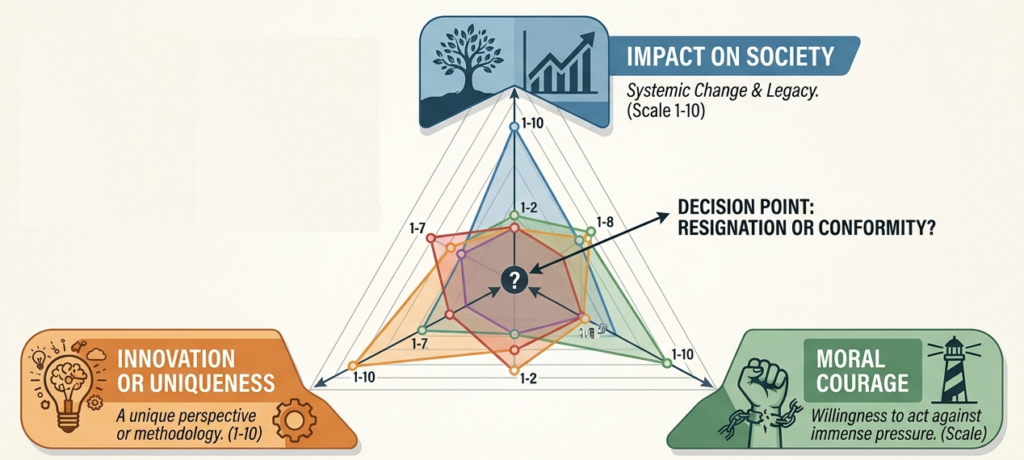
Figure 2. Righteous Behavior Scorecard Framework
Righteousness Scorecard
To complement qualitative analysis, this section introduces a structured Righteousness Scorecard that evaluates the actions of the six prosecutors across three core dimensions: Moral Courage, Societal Impact, and Innovation/Uniqueness. These scores are jointly assessed by AI-assisted analysis and the editorial team of The Righteousness Digest to ensure both analytical consistency and human judgment.
Table 4. Righteousness Scorecard for the Six Prosecutors (Minnesota, 2026)
| Dimension | Score (0–10) | Rationale |
|---|---|---|
| Moral Courage | 9 | Demonstrated high personal risk by resigning rather than complying with perceived injustice. |
| Societal Impact | 8 | Elevated public awareness of prosecutorial integrity and institutional ethics. |
| Innovation/ Uniqueness | 9 | Rare example of coordinated resignation as a form of ethical institutional resistance. |
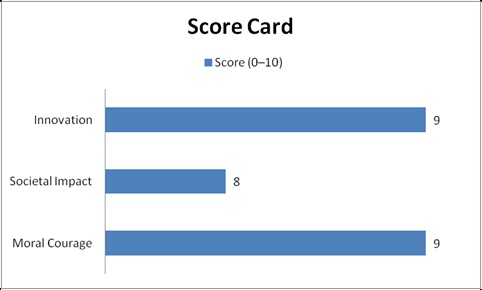
Figure 3 Performance Scorecard Data Visualization
Table 4 and Figure 3 presents a concise evaluation of the prosecutors’ actions using a three-dimensional righteousness framework. The scores are generated through a hybrid evaluation model combining AI-based analytical scoring and editorial review by The Righteousness Digest. Moral Courage reflects their willingness to accept personal and professional consequences. Societal Impact measures the extent to which their actions influence public discourse and institutional accountability. Innovation/Uniqueness captures the rarity and originality of using collective resignation as a principled response. Together, these scores provide a structured lens to assess righteous behavior within complex institutional environments.
Absolutely! Here’s a concise, under-300-word section you can drop in, including a single table and a Bible citation:
Righteousness Analysis from a Biblical Perspective
The actions of the six Minnesota prosecutors can be evaluated through a Biblical lens, focusing on specific decisions rather than personal character. Scripture emphasizes that righteousness is measured by choices aligned with justice, mercy, and protection of the innocent (Micah 6:8): “He has shown you, O mortal, what is good. And what does the Lord require of you? To act justly and to love mercy and to walk humbly with your God.”
The prosecutors faced directives that prioritized political considerations over truth and fairness. By collectively resigning, they acted to preserve justice, protect vulnerable individuals, and resist unjust institutional pressures. Their resignation demonstrates moral courage, restraint in authority, and concern for the welfare of others—three pillars of Biblical righteousness.
Table 5 Biblical Righteousness Alignment of the Six Prosecutors’ Decisions
| Principle | Alignment | Rationale |
|---|---|---|
| Truth & Justice | High | Resigned rather than comply with orders compromising justice |
| Mercy & Restraint | High | Avoided unjust prosecution of a grieving widow |
| Protection of the Innocent | High | Prevented harm to individuals who could be unfairly targeted |
This analysis emphasizes that righteousness is demonstrated through action: even within imperfect institutions, individuals can uphold Biblical standards by choosing justice, mercy, and protection over expediency or conformity. The six prosecutors’ decisions illustrate how principled action in the face of pressure aligns with God’s call for justice and mercy.
Reflection
The Minnesota event of 2026 serves as a profound reminder that institutions do not guarantee righteousness—people do. Systems are only as just as the individuals who operate within them.
This case challenges modern society to reconsider several critical ideas:
- Is obedience always virtuous within institutional roles?
- What mechanisms exist when internal correction fails?
- Can resignation be a constructive force rather than a retreat?
From a broader perspective, this event highlights the necessity of embedding ethical resilience within professional training and governance systems. Without such resilience, institutions risk becoming efficient—but not just.
Ultimately, the six prosecutors did not merely leave their positions—they redefined the boundaries of professional integrity. Their actions illustrate that righteousness is not passive compliance, but active alignment with truth, even at personal cost.
Loyalty to Justice Over Loyalty to Institution
These were not activists or political appointees. They were career prosecutors—people who had devoted their professional lives to the Department of Justice. Joseph Thompson had served as acting U.S. attorney and led the largest fraud investigation in Minnesota history (Londoño, 2026). Ana Voss was the civil division chief handling hundreds of cases (Weiss, 2026). They left because their loyalty to justice outweighed their loyalty to institution.
Refusing Unjust Orders
The prosecutors were not asked to do anything illegal—as U.S. Attorney Daniel Rosen reminded them (Sirota, 2026). But they were asked to do something unjust: investigate a grieving widow instead of the officer who killed her wife; prosecute protesters without examining officer conduct; and ignore their professional judgment about what equal justice demanded. As one resigning prosecutor put it, “This was the ultimate example of selective prosecution” (The New Republic, 2026a).
Collective Action Amplifies Individual Courage
Six resignations made news. Fourteen resignations—more than the office typically loses in a full year—made history (Associated Press, 2026). By acting together, these prosecutors signaled that their concerns were not idiosyncratic but reflected a systemic breakdown. Their numbers gave cover to one another and made the protest impossible to ignore.
References
Associated Press. (2026, February 3). Another wave of departures in Minnesota’s U.S. attorney’s office. Star Tribune.
Associated Press. (2026, February 19). As political pressure prompts exodus of Minnesota prosecutors, some defendants catch a break.
Bloomberg Law. (2026, January 14). Six US prosecutors resign in Minnesota as crackdown builds.
CNN. (2026, January 13). At least six federal prosecutors in Minnesota resign. CNN.
FOX 9 Minneapolis-St. Paul. (2026, February 2). More prosecutors leaving MN U.S. Attorney’s Office over frustrations: Report. FOX 9.
KNSI News. (2026, January 13). Wave of resignations hits Minnesota U.S. Attorney’s Office.
Londoño, E. (2026, January 13). 3 prosecutors quit after push to investigate ICE shooting victim’s widow. The New York Times.
Northern News Now. (2026, January 13). 6 federal prosecutors in Minnesota resign amidst pressure from Trump administration.
Office of Governor Tim Walz. (2026, January 13). Statement on six prosecutors resigning from U.S. Attorney’s Office.
Sirota, S. (2026, February 3). Pam Bondi hit by fresh humiliation as Minnesota prosecutors quit in droves. The Daily Beast.
The New Republic. (2026a, January 13). Prosecutors quit after order targeting Minneapolis ICE victim’s widow. The New Republic.
The New Republic. (2026b, February 3). Minnesota prosecutors quit en masse thanks to Pam Bondi’s orders. The New Republic.
Weiss, B. S. (2026, February 5). Democrats warn immigration crackdown is gutting US attorney offices. Courthouse News Service.