
Righteous Hero: Loyalty and Courage of Yue Fei
Song Dynasty General from China Whose Moral Integrity Inspired Generations
Introduction
Yue Fei (岳飛; March 24, 1103 – January 27, 1142 | China) was a renowned military general of the Southern Song Dynasty who dedicated his life to defending his homeland against the invading Jurchen forces of the Jin Dynasty. Born in Tangyin, Henan Province, into a humble farming family, Yue Fei rose through the ranks due to his exceptional martial skill, strategic brilliance, and unwavering loyalty. Over two decades of military service, he led the famed Yue Family Army, winning over a dozen major campaigns and becoming a symbol of patriotic devotion. Despite his military success, he was falsely accused of treason by a corrupt prime minister and executed at the age of 39. His legacy endures as China’s quintessential icon of loyalty, righteousness, and moral courage.
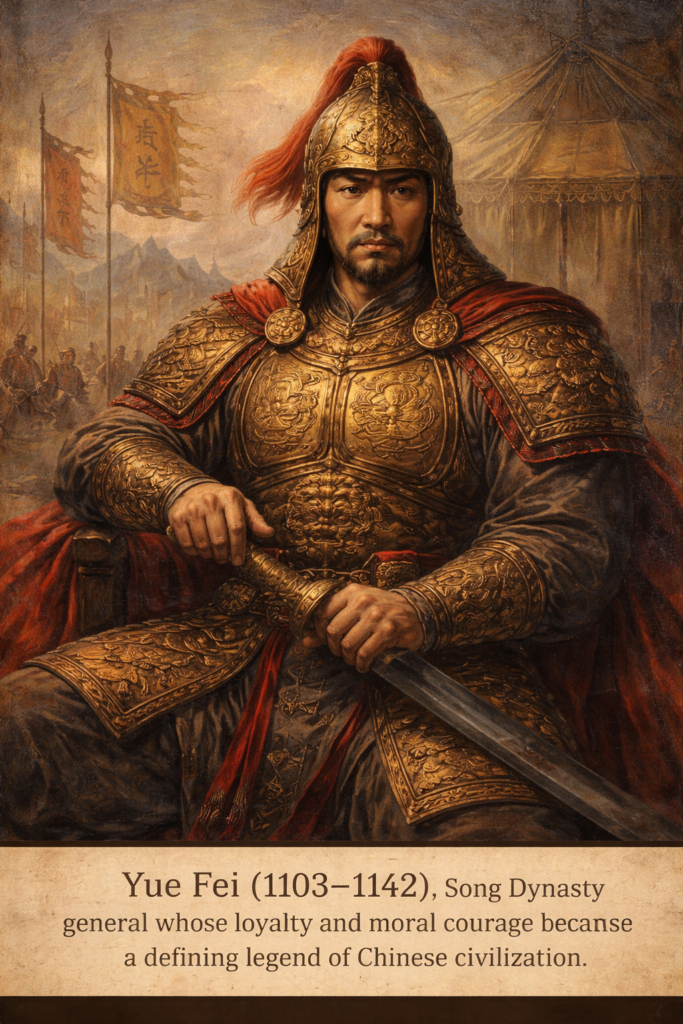
Figure 1. Portrait of Yue Fei
Table 1. Timeline of Yue Fei’s Life
| Year | Age | Event |
|---|---|---|
| 1103 | 0 | Born in Tangyin, Henan Province |
| 1122 | 19 | Enlists in the army to resist Jin invasion |
| 1127 | 24 | Jin Dynasty captures the Northern Song capital; Yue Fei swears to restore the homeland |
| 1127–1134 | 24–31 | Fights in numerous battles; gains reputation for valor and tactical brilliance |
| 1134 | 31 | Leads successful counteroffensive, recaptures six prefectures |
| 1138–1140 | 35–37 | Achieves decisive victories against Jin forces; reaches the Yellow River |
| 1141 | 38 | Recalled from battlefront; stripped of command |
| 1142 | 39 | Executed on false charges; his story becomes legend |
| 1162 | — | Posthumously exonerated and honored by Emperor Xiaozong |
Table 2 The Righteous Events, Decisions, and Acts
| No | Event / Decision / Act | Context | Righteous Quality Demonstrated |
|---|---|---|---|
| 1 | Enlisting to defend the homeland | At age 19, he left his aging mother to join the army despite personal hardship | Self-sacrifice |
| 2 | Tattooed by mother: “Serve the Country with Supreme Loyalty” (盡忠報國) | His mother inscribed these four characters on his back as a permanent reminder of duty | Filial piety transformed into patriotic duty |
| 3 | Refusing to retreat against superior enemy forces | At the Battle of Yan Cheng, he charged into the Jin army with a small force and defeated their elite cavalry | Courage under fire |
| 4 | Creating the disciplined Yue Family Army | Instituted strict rules: “Do not steal from the people, do not harm civilians” | Moral leadership |
| 5 | Refusing to join corrupt officials | Rejected alliances with powerful but corrupt court officials who sought personal gain | Integrity and independence |
| 6 | Turning down promotions to prioritize the war effort | Declined titles and rewards to focus on defeating the Jin invaders | Humility and focus on mission |
| 7 | Marching toward the capital to recapture lost territory | Led forces to the Yellow River, on the verge of total victory, despite court hesitation | Unyielding commitment |
| 8 | Obeying recall orders despite being on the brink of victory | Received 12 gold edicts ordering his return; obeyed knowing it would end the campaign | Loyalty over personal ambition |
| 9 | Accepting imprisonment without resistance | When falsely accused, he did not rebel despite having the loyalty of his army | Trust in justice and restraint |
| 10 | Maintaining innocence until death | His final written words: “My loyalty is as clear as the sun and moon” | Unbroken moral conviction |
Hard Times: Trials That Tested Yue Fei’s Righteousness
Yue Fei’s life was marked by profound hardship—not only from external enemies but from the betrayal of his own government. The following table outlines the key adversities he faced and how his righteousness was tested.
Table 3 Major Life Challenges and Hardships
| Hardship | Description | How Righteousness Was Tested |
|---|---|---|
| Poverty in childhood | Born into a peasant family; lost his father at a young age; worked in the fields while studying military classics | Resilience and self-discipline were forged early |
| Death of his father | His father, Yue He, died when Yue Fei was a child; the family struggled to survive | He learned responsibility and perseverance |
| Corruption in court | Prime Minister Qin Hui and other officials prioritized political power over national defense | Yue Fei refused to compromise with corrupt figures |
| False accusations | Qin Hui fabricated charges of treason to remove Yue Fei as a political threat | He chose loyalty over rebellion, even when innocent |
| Imprisonment | Held in a cell and interrogated under torture; he refused to confess to fabricated crimes | Physical suffering did not break his moral resolve |
| Execution | Strangled in prison at age 39; his family was exiled | He accepted death rather than betray his integrity |
“My loyalty is as clear as the sun and moon. What crime have I committed?”
— Yue Fei, during his imprisonment
Righteousness Scorecard
The following Table 4 and Figure 2 illustrate Yue Fei’s scores across three key dimensions of righteousness. He earns top marks in moral courage, societal impact, and innovation—a reflection of his unwavering loyalty to country over self, his enduring influence on Chinese cultural values of patriotism and integrity, and his creation of a disciplined moral framework for military leadership that was unprecedented in its emphasis on civilian welfare. These scores represent an overall evaluation conducted by the AI and the editors of The Righteousness Digest.
Table 4. Righteousness Scorecard for Yue Fei
| Factor | Score (0–10) | Rationale |
|---|---|---|
| Moral Courage | 10 | Falsely accused, imprisoned, tortured, and sentenced to death, he refused to confess to fabricated crimes or betray his principles. He chose death over dishonor, demonstrating absolute moral resolve. |
| Societal Impact | 10 | His story became the foundational legend of loyalty in Chinese civilization for over 800 years. His name symbolizes patriotic devotion across East Asia, influencing literature, opera, education, and cultural values for generations. |
| Innovation / Uniqueness | 9 | Established the Yue Family Army with unprecedented ethical standards: “Do not steal from the people, do not harm civilians.” He institutionalized moral conduct as a core military doctrine—a rare innovation in medieval warfare. |
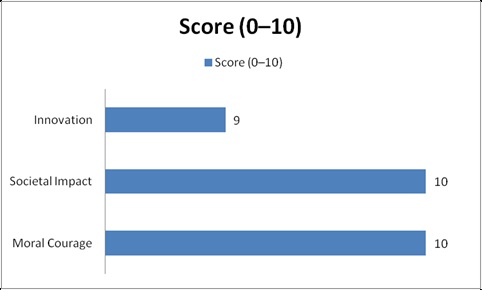
Figure 2 Performance Scorecard Data Visualization
Here’s a concise article section modeled after your Yue Fei case, focusing on Righteousness Analysis from a Biblical Perspective with one table included and no graph:
Righteousness Analysis from a Biblical Perspective
Yue Fei’s life exemplifies timeless principles of righteousness, which can be interpreted through a biblical lens. His unwavering loyalty, moral courage, and ethical leadership resonate with key scriptural precepts, such as Micah 6:8: “He has shown you, O man, what is good; and what does the Lord require of you but to do justly, to love mercy, and to walk humbly with your God?” Yue Fei’s decisions reflect doing justly in his defense of the homeland, loving mercy through the protection of civilians, and walking humbly by obeying imperial commands despite personal risk.
The following table evaluates Yue Fei’s alignment with biblical righteousness principles:
Table 5. Biblical Righteousness Alignment
| Principle | Example from Yue Fei’s Life | Observed Righteousness |
|---|---|---|
| Justice & Integrity | Refused to join corrupt officials and obeyed recall orders despite risking military victory | Demonstrates commitment to justice over personal gain |
| Compassion & Mercy | Created the Yue Family Army with rules forbidding harm to civilians | Prioritized care for the innocent |
| Courage & Faith | Accepted imprisonment and execution without rebellion | Shows moral courage and steadfast faith in principles |
| Humility & Service | Declined promotions to remain focused on defending the homeland | Embodied servant leadership and selflessness |
Yue Fei’s life, when interpreted through this biblical framework, illustrates that true righteousness transcends military or political success. His fidelity to principle—placing justice, mercy, and humility above personal ambition—serves as a model for ethical leadership in any era. By evaluating historical figures through these dimensions, one can systematically analyze their moral decisions, creating a replicable framework for assessing righteousness across cultures and epochs.
What We Can Learn from Yue Fei
1. Loyalty Is Not Blind Obedience
Yue Fei was loyal to his country and people—not to corrupt officials. True righteousness requires discerning when authority has lost its moral compass.
2. Moral Courage Surpasses Physical Courage
While Yue Fei was a brilliant warrior, his greatest legacy is his moral fortitude: refusing to betray his principles even when facing death.
3. Integrity Must Be Forged Before Crisis
His mother’s tattoo was not merely symbolic. The values inscribed on his back became the foundation for every decision he made. Righteousness is not spontaneous—it is cultivated.
4. Victory Is Not the Only Measure of Righteousness
Yue Fei lost his life and did not achieve his political goal of reclaiming the north. Yet his moral legacy outlived his enemies and continues to inspire nearly 900 years later. Righteousness is measured by fidelity to principle, not by worldly success.
5. Sacrifice Has Ripple Effects Across Generations
Though he was executed, his story became a template for righteous resistance throughout Chinese history. One person’s integrity can shape a civilization.
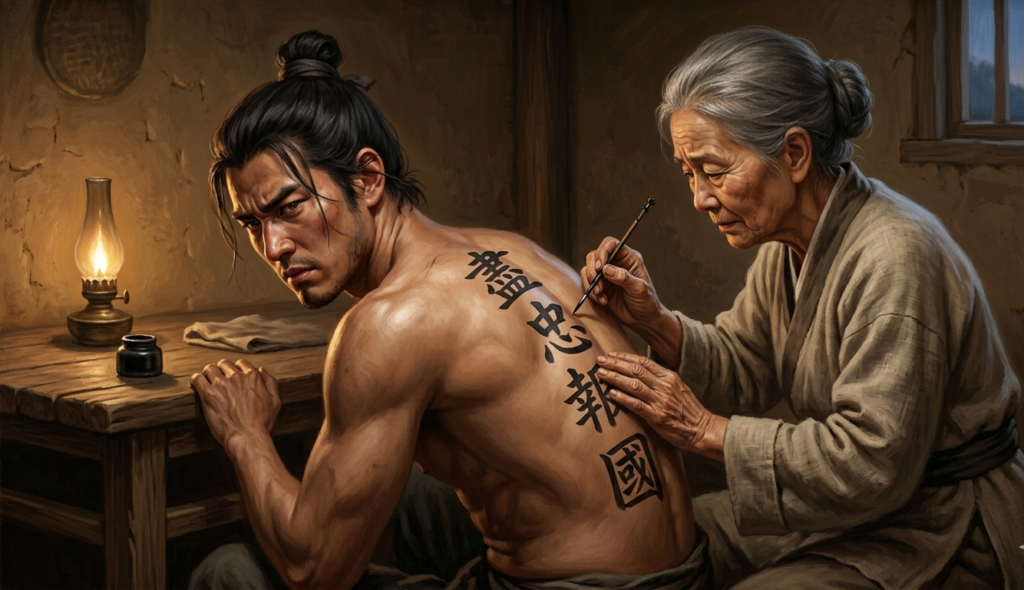
Figure 3 A Mother’s Call to Duty: The Tattooing “Serve the Country with Supreme Loyalty”
Reflection
What can we learn from Yue Fei today?
In an age where loyalty is often equated with allegiance to institutions, political parties, or powerful individuals, Yue Fei’s story offers a more profound vision. His loyalty was not to the corrupt court that executed him, but to the people, the homeland, and the moral order he believed in. He understood that true righteousness sometimes requires refusing unjust orders, enduring unjust punishment, and trusting that history will vindicate the just.
Yue Fei teaches us that righteousness is costly. It may cost career, freedom, or even life. But it also endures. Nearly nine centuries after his death, schoolchildren across China still learn his name. His enemies—Qin Hui and his co-conspirators—are remembered only as kneeling iron statues outside Yue Fei’s tomb, cursed by generations.
In the Righteousness Digest, we celebrate such figures not because they won lots of battles to be called as the winner, but because they do not lost their moral compass. Yue Fei stands as a timeless reminder that character outlasts empire.
References
- Liu, J. T. C. (1988). China turning inward: Intellectual-political changes in the early twelfth century. Harvard University Press.
- Mote, F. W. (1999). Imperial China, 900–1800. Harvard University Press.
- Tao, J. (1976). The Jurchen in twelfth-century China: A study of sinicization. University of Washington Press.
- Yue, K. (1984). The story of Yue Fei (E. H. S. & M. H. S. Shapiro, Trans.). China Reconstructs Press. (Original work compiled in the 14th century)
- Tillman, H. C. (1995). The transmission of the story of Yue Fei in Chinese popular culture. Asia Major, 8(2), 157–186.
- Chen, X. (2020). Loyalty and betrayal: The Yue Fei narrative in Chinese historical memory. Journal of Chinese History, 4(1), 89–112.
- National Palace Museum. (n.d.). The patriotic general Yue Fei. Retrieved March 27, 2026, from https://www.npm.gov.tw